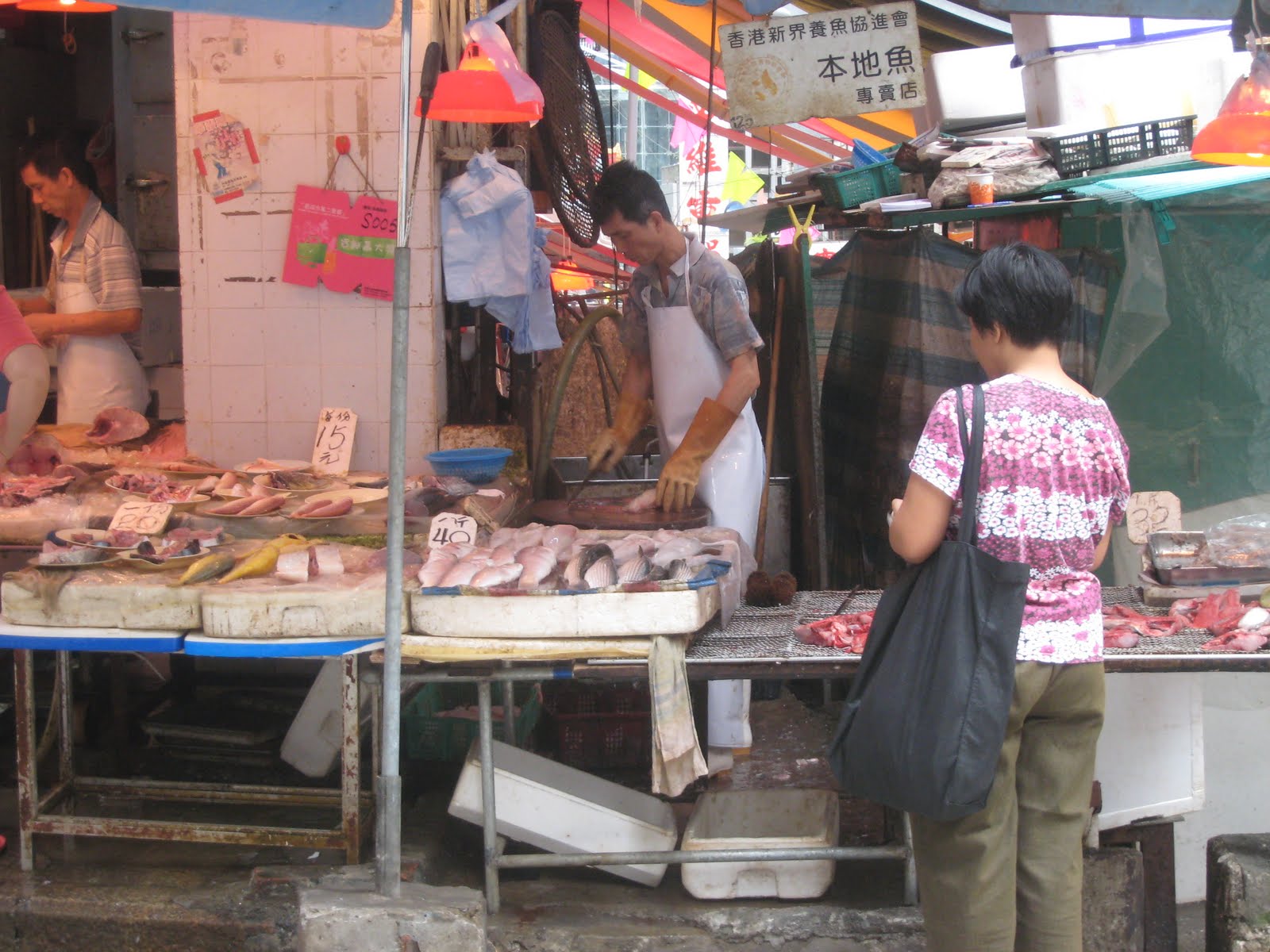
Wednesday, May 25, 2011

Walking Tour: Star Ferry

Welcome to the third edition of Walking Tour Wednesdays. If you missed the first two weeks, we explored Hollywood Road and the market streets of Sheung Wan. Today's tour will take us to the iconic Star Ferry, where you can even sit down for part of the tour.


Let's start out in the IFC Mall, right above Hong Kong station and the Airport Express.


You can get from IFC to the piers almost without touching the ground.


Follow the walkway...


...and make sure you snap a few pictures of the view along the way.


It gets better as you get closer to the waterfront.


When you reach the end of the walkway, take the escalator on your left.


If you stayed above the ground, you could walk all the way to the Macau Ferry...


...but you should go down so you can get a better view of the piers.


To your left is the Discovery Bay ferry. Located on Lantau Island, Disco Bay is an expatriate enclave that looks vaguely like San Diego.


If it's a nice day, there will be lots of other people on the waterfront.


Turn right and start counting the piers as you walk.


First up is the ferry to Lamma Island, a hippie and seafood paradise just 25 minutes from the rush of Central Hong Kong.


There will probably be other tourists walking with you.


Take a look to your left...


You'll be able to see Kowloon and maybe a cruise ship or two on the other side of Victoria Harbour.


And you'll see more tourists as you continue your walk along the waterfront.


The next ferry on your left will take you to Cheung Chau, a pretty little crescent shaped island in the shadow of larger Lantau.


Look to your left again and you'll see your first Star Ferry out on the water.


The ferries at the next pier will take you to tiny, undeveloped Peng Chau or to Mui Wo (also known as Silvermine Bay), one of the many bays of Lantau Island.


Take one last look to your right at the taxis and the bus terminal.


Now look up ahead, and you'll see the famous Star Ferry pier.


I just happened to arrive at the pier at the same time as the party ferry. The rest of them are green and white.


In case you lost count, the Star Ferry leaves from pier 7.


To your right you'll be able to see the old Central Pier, but these days it is too far away from the water to use.


Walk through the pier...


...and pay the nominal fee for the ride.


Join the crowds on the gangway...


...and mind your head as you walk onto the ferry.


Find yourself a seat...


...sit back and enjoy the ride.


You'll probably catch a glimpse of a normal Star Ferry on your way across the harbor.


The best part is always the view.


That 118-storey building on your left is home to the highest hotel, the highest bar, and the highest chocolate library in the world.


On your right you can see the exhibition center in Wanchai.


As the ferry crosses the harbor, see what other boats you can spot along the way.


Eventually you'll near Tsim Sha Tsui and the ferrymen will prepare to bring the ferry to dock.


As you wait for the ferry to come to a stop, take a look to your left at the cruise ship terminal.


Also look behind once again at Hong Kong Island.


As you exit the ferry take a peak into the engine room...


...and check out what lies beneath the pier on this side.


Climb the ramp...

...and you'll emerge into the busyness of Tsim Sha Tsui.


Look out for the guys hawking copy watches and tailor services as you join the flood of tourists.


TST is busy and grungy, and quite different from the piers you just left behind on Hong Kong Island.


You'll see the performing arts center and clock tower on your right as you walk further into TST.


Since this is tourist territory you can finish your Star Ferry tour at the Starbucks in Star House.


I hope you enjoyed the tour. Next Wednesday we'll take another look at Hong Kong. I have two walking tours lined up: a stroll through the Zoological and Botanical Gardens (flowers and birds and monkeys) and a tour of Mongkok (crowds and commercialism). Which one do you want to see first?

Monday, May 23, 2011

THE GOOD GIRL'S GUIDE TO GETTING LOST by Rachel Friedman


THE GIST:

An American girl cannot decide what to do with her life, so she wanders around Ireland, Australia and South America with a free-spirited friend.

THE VERDICT:

This is a fun coming-of-age story about a young woman who is just discovering the joys of travel. Good girl Rachel Friedman makes an uncharacteristic decision to go to Ireland without a plan. She is predictably unprepared for the challenges of living in a new country, but soon meets up with Carly, an adventurous Australian, who helps her make the most of her new life and an over-abundance of Guinness. Their friendship eventually takes them around the world, and Friedman learns to let go of her need for a plan and to embrace the freedom of each experience.

Although there are plenty of interesting descriptions of the various exotic locales, this is really a book about traveling culture. The characters who feature most prominently are backpackers from around the world. They have chosen to explore the far reaches of the world for a host of different reasons, but they share a common bond on the road. The book does not create a lasting impression of the locals or the cultures of the various countries, except when Friedman lives with Carly's family in Australia. It is really about being open-minded and allowing oneself to live a life that is different from the traditional American career path, wherever it may take you.

The writing style is witty and genuine. Friedman has no trouble being honest as she details the struggles she has had with her parents, a sense of failure resulting from her decision to leave music school, and the practical discomforts of long-term travel. Her voice is thoroughly engaging, and she captures the attitude of a generation of young people who want something more than a soul-destroying job in the city. This is a book that will speak to anyone who has wondered what they really want to do with their lives (i.e. pretty much everyone), and is especially relevant for young people who have discovered that their preferred industry is now closed to them in the new economic climate. More than anything, it is a book about possibilities.

THE LINK:


THE COST:

$9.99 for the Kindle edition

THE QUESTION:

Are you doing what you have always wanted to do with your life? What has affected or changed your path the most?

Sunday, May 22, 2011

Bookspotting: Week 17


This week a schoolgirl sat next to me on the MTR reading Paddy Clarke Ha Ha Ha, the 1993 Booker Prize winner by Roddy Doyle. A young man was reading The Lost Symbol by Dan Brown at Kowloon Bay station. I attended an event at the Asia World Expo where I saw a Western woman reading Crusader Gold by David Gibbons. This afternoon I saw a Chinese woman carrying a yellow paperback called Nudge. I had to take a bit of a detour to see the title, and I didn't catch the name of the author through her fingers. There are two books called Nudge listed on Amazon. One is by Leonard Sweet and the other is by Richard Thaler and Cass Sunstein. Both of them have yellow covers. I saw just three Chinese books this week, one Hong Kong guidebook and one big biology textbook. 

What are people reading in your town this week?

Thursday, May 19, 2011

THE HANDMAID'S TALE by Margaret Atwood


THE GIST:

A woman is relegated to the role of breeder in a dystopian pseudo-biblical society.

THE VERDICT:

Margaret Atwood's well-known story explores a nation in which a woman's exclusive purpose is to bear children; not to raise them or care for them, just bear them. She creates a world where women have lost their hard-won rights and are confined to color-coded roles. The narrator of the story has the role of a handmaid who, like Abraham's Hagar, is forced to serve as a surrogate mother for a powerful couple. She is enslaved by her biological capabilities and must struggle against the society's insistence that the only valuable aspect of her womanhood is her body.

Perhaps the most interesting thing about this story is that the narrator can remember what life was like before the dystopian society arose. She had a life full of freedoms and loved ones and education, so she knows exactly what she is missing under the new order. Future generations of women would have an easier time in their restricted roles because they would not know just how different their lives could be. The author emphasizes that women should not forget the fragility of their positions and suggests that it is all too easy to accept a reduced place in the world.

The novel is framed as a fragmented retelling of the woman's experiences. Atwood revels in the art of storytelling, and reminds the reader than any story is necessarily a reconstruction of the truth. The narrator sometimes offers several different versions of the same event and some of the scenes are out of sequence. This form highlights the subjective nature of storytelling and of history itself. It is not a pleasant novel to read, but it is a thought-provoking and intelligent work.

THE LINK:


THE COST:

$8 for the Kindle edition

THE QUESTION:

This book was published in the mid 1980's. Do you think that any of Atwood's fears about the future of women's rights have been realized in that last 25 years?

Wednesday, May 18, 2011

Walking Tour: Sheung Wan Markets

Welcome to the second installment of the new Hong Kong Walking Tours. If you missed last week's adventure, we visited the antique galleries and street scenes of Hollywood Road. Today we will check out the markets of Sheung Wan.


Let's start our tour on Queen's Road, just across from the Grand Millennium Plaza.


Turn around and you'll see lots of evidence that Hong Kong is still a work in progress.


Walk up Wellington Street, taking in the timber and stationary and hardware stores.


You'll see signs of everyday life everywhere you look.


There will be plenty of Western business as you make your way up the street.


Look to your left to see the little alleyways that would take you back down to Queen's Road.


Hong Kong is crowded and busy and vibrant...


...and there will be plenty of people walking with you.


To your right you will see businesses selling everything you could possibly need.


To your left take note of a good place for tea.


When you reach Peel Street, turn right.


The first stall on your left sells lucky goldfish.


 As you walk up the narrow road, prepare for a riot of color.


You might see an old woman burning paper.


You'll see clothes and kites and paper lanterns.


If you keep walking you'll see more paper lanterns.


There's always a bit of dust and work amidst the bright colors.


We are approaching the wet (food) section of the market.


At the fish stall on the corner you'll make a left turn.


Take a look at the modern restaurants and apartments up above...


...then enjoy the color and life of the food stalls below.


This woman is tending an incense stand next to a butcher.


Not every shop is open for business today.


Stop in at this dry goods store if you need soy sauce or dehydrated octopus.


This vegetable stand might be a better choice.


This street sign will help you get your bearings.


And notice that the market continues downhill to your left.


You can pick up some reasonably fresh fish for dinner here...


...and you can buy more meat and dried goods on your right.


You might need to squeeze by a truck or two as you walk through the busy market.


Haggle for some flowers if you want to add color to your apartment.


The French cafe will remind you that Hong Kong is a fiercely international city.


The chickens and ducks in the windows will remind you that this is still China.


Take one more look to your right at the busy shoppers...


...and a look to your left at my favorite bakery.


If all this shopping has made you hungry, you can finish your tour at the famous Lan Fong Yuen, as long as there's not a line. If you're not feeling brave...


...you've arrived at the mid-levels escalator, so you will be able to find your choice of Western food.


Come back next week for more Hong Kong walking tours.

Sunday, May 15, 2011

Bookspotting: Week 16


This week I saw a total of three people walking and reading at the same time. I greatly admire this skill. The first two were young girls reading Chinese books. The third was a young man reading Harry Potter and the Sorcerer's Stone as he walked up Elgin Street. I spotted a woman in a coffee shop with The Girl with the Dragon Tattoo by Stieg Larsson. Two days later I saw a man in a restaurant reading The Girl Who Played with Fire. I saw a woman reading a hefty novel in a movie theater before the film began. The cover design was elaborate but I couldn't see the title. One morning this week a man stood across from me on the MTR reading the very first chapter of Life Without Limits by Nick Vujicic. I spotted three Chinese books this week, including the ones mentioned above.

What are people reading in your town this week?

Saturday, May 14, 2011

LOST ON PLANET CHINA by J. Maarten Troost


THE GIST:

A man travels around China and discovers that it is more complicated and crowded than he anticipated.

THE VERDICT:

This is a detailed and interesting travel narrative about a man who decides to explore modern China without being fully prepared for the drastic changes that have occurred there in recent years. He expects a Cold War-like communist country and instead he finds a nation in the throes of lightning fast industrial development. He finds pollution, blatant capitalism and crowds everywhere he turns. He meets a confident, nationalistic people who know they are gearing up to be the new economic powerhouse where he expected to see chronic poverty.

China is a complicated and enormous country, and trying to understand it, especially while traveling through it and not living there, is a difficult task. It is probably not fair to compare this book to RIVER TOWN because Peter Hessler is one of my heroes, but I think Troost lacked a lot of the humility and patience that made Hessler's work so compelling. He makes astute outsider's observations, but he is providing a survey of the country, not an in-depth look at the people. By the way, Hong Kong is very different from China, so I am not suggesting that I know China either.

Troost's voice is funny and irreverent. He does not shy away from talking about the least savory practices and problems in China, though he does have a tendency to exaggerate. He has very strong political opinions, and in this case they actually made the book feel unnecessarily dated. Although I found the book fascinating, there are better books out there if you want to understand China a little bit better rather than just marvel at how alien it can be. 

THE LINK:

Here's an interview with J. Maarten Troost on Rolf Potts' website.

THE COST:

$10.99 for the Kindle edition

THE QUESTION:

What images do you associate with China? What do you think shapes your perception of China?
Related Posts Plugin for WordPress, Blogger...