Showing posts with label inspiring. Show all posts

Monday, October 20, 2014

The Dragonfruit Launch Party

On Thursday we celebrated the launch of How Does One Dress to Buy Dragonfruit? True Stories of Expat Women in Asia with a party at Bookazine in Hong Kong. Thank you to everyone who came out and made the event such a success! All photo credits go to Anshuman Das from Signal 8 Press.

A great crowd at Bookazine on 16 October 2014
Contributor India Harris came all the way from the Philippines for the party.
Contributor Coco Richter introducing her story.
Contributor Stephanie Han gave a beautiful reading of her Hong Kong story.
Contributor Susan Blumberg-Kason came all the way from Chicago for the event, and to launch... 
...her new memoir Good Chinese Wife.
Contributor Jennifer S. Deayton finished off the readings with an excerpt from 'Bread and Knives.'
After the readings all the contributors signed books for their friends and fans.
Here's Signal 8 publisher Marshall Moore with Dragonfruit inspiration and novelist Xu Xi.
Friend and writer Carol tells me she is already almost finished with the book!

We were happy that Asia Literary Agency founder Kelly Falconer could make it to the event.
Thank you to everyone who attended!
And here's me eating the microphone.

P.S. On the day of the Dragonfruit party I turned in my final edits for Year of Fire Dragons: An American Woman's Story of Coming of Age in Hong Kong. The book will be in stores very soon. Here's the Goodreads page if you'd like to add it!


Wednesday, May 28, 2014

Kindle Single - Pay Off: How One Millennial Eliminated Nearly $80,000 in Student Debt in Less Than Five Years

I'm excited to announce that my Kindle Single on student debt was released on Friday. Naturally, this means I've been refreshing my Amazon ranking on an hourly basis. Over the weekend, the book reached the Top 10 on several best seller lists, including Kindle Singles: Essays & Ideas and Kindle Singles: Memoir.

I'm also a little nervous about this book. It's a sensitive topic. While I hope people will find my analysis fair, I know it has the potential to attract negative comments as well. It will be interesting to see what happens as the reviews come in (so far so good)!

The other reason I'm nervous is that I write exactly how much money I made over the last five years, what my rent has been, and my SAT scores (among other things). It's scary to reveal so much personal information, but I felt it was necessary if this book is to be a candid portrait of a student debtor and a useful resource.

It has been great to work with the folks at Kindle Singles, including my editor--who recognized the appeal of a student debt success story and helped me with the tone--and the cover designer--who does amazing work. I hope that the story will be both encouraging and informative for graduates and their parents. I'd appreciate it if you could share this with any of your friends who are struggling with student debt, especially in the US.

Cover design by Hannah Perrine Mode
Pay Off: How One Millennial Eliminated Nearly $80,000 in Student Debt in Less Than Five Years
By Shannon Young

In 2009, amid the global financial crisis, 21-year-old Shannon Young graduated from college with a degree in English and more than $80,000 in student debt. Less than five years later, she was completely debt-free. This is her story – a cautionary tale with a surprisingly hopeful outcome. Filled with practical advice and personal experience, Pay Off is an invaluable resource for anyone coming into or out of student debt.


$1.99 on Amazon

Monday, May 12, 2014

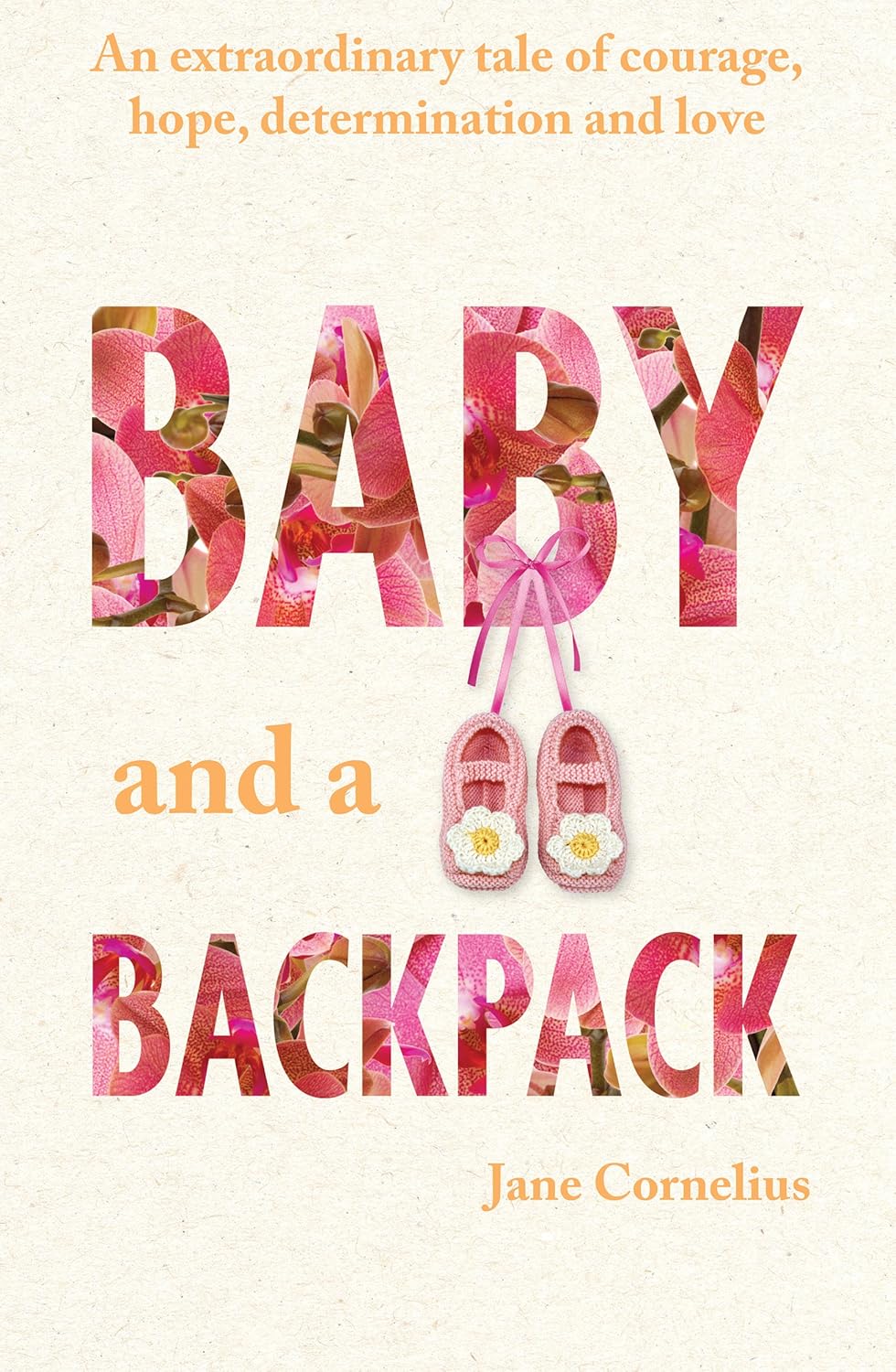
BABY AND A BACKPACK by my friend Jane Cornelius

I first met Jane Cornelius at the Hong Kong International Literary Festival in the spring of 2011. She was sitting in the front row at a talk for aspiring writers, wearing a huge pair of zebra patterned glasses and taking feverish notes with an oversize pen. I was a volunteer--my strategy for attending as many events as possible without having to pay for tickets--and I'd recently admitted that I was also an aspiring writer.

I don't remember everything the speaker said, but I remember Jane. She was eager to soak in as much advice as she could, asking smart questions and making it clear that she was writing actively, not just dreaming about it. At the end of the talk, the speaker suggested that members of the audience connect with each other, perhaps to form writers' groups. I ended up collecting the email addresses. When I sent out a tentative query to this bunch of strangers about possibly meeting up to talk about writing, Jane was the first to respond.

Jane, another writer named Betsy, and I met at a coffee shop at the bottom of Lan Kwai Fong that has since been replaced with another clothing store, and talked shop. Jane was nearly finished with her second manuscript, a memoir of the year she was abandoned by the father of her child and decided to travel the world with a newborn baby. As she talked about her adventures in Bali, Australia, Hawaii, California, and my home state of Arizona--all with a baby in tow and almost no money--I could hardly believe it. Hers was a life of true adventure. She had a real, high-stakes story--a story that was worth writing.

Soon, I'd get to experience the vibrant, whimsical writing style that is all her own. I'd get to see the determination with which she approached her writing career. And I'd even get to participate as we became critique partners. She asked for help with grammar mechanics and polish; I asked for help with plot and with cutting the boring stuff from my writing. It is thanks to her that my own travel memoir (forthcoming from Blacksmith Books later this year) eventually became interesting and honest enough to send to publishers. Even when Jane moved on to Shanghai, we sent chapters and encouragement back and forth.

Over time, I learned that Jane's life of adventure also had a more difficult, tragic backstory. I got to read her first manuscript, a childhood memoir of when she grew up in the English countryside with a legally insane mother, a pro-wrestler father, and a stepmother who was the Bunny Mother of the Playboy Club. When an editor suggested that Jane combine the two manuscripts, I got to read them again as she weaved her stories into one.

Now, Jane's memoir Baby and a Backpack has been published by The Five Mile Press in Australia. She's on a whirlwind tour of bookstores and media, and I couldn't be more excited for her. Baby and a Backpack is also available worldwide for Kindle, so I recently got to read the story again in its finished form. It packs the same emotional punch even after multiple reads, and I recommend it unequivocally. This is a wonderful book about motherhood, travel, and finding a home in a wild, crazy world. And through this story, you get to know the quirky, inspiring, and brave Jane Cornelius, a woman I am proud to call my friend.

Tuesday, October 9, 2012

Hong Kong Literary Festival

With Cheryl Tan at the Hong Kong Literary Festival
This weekend I went to City University in Kowloon Tong for two writing workshops as part of the Hong Kong International Literary Festival. The workshops were taught by Cheryl Tan, author of A Tiger in the Kitchen and Fuchsia Dunlop, author of numerous Chinese-food-related books, including Shark's Fin and Sichuan Pepper. It was inspiring to see two women, both journalists, who have turned their passions into admirable careers. In addition to the speakers, I got to meet some cool local writers and catch up with some of my writing friends in the audience. Here's some of what I learned:

Cheryl Tan on mining your family history for stories

Cheryl Tan is the author of a family memoir about how she got to know her Singaporean relatives, and her grandmother in particular, by learning to cook their food. A New-York-based journalist, Cheryl facilitated the workshop by sharing her own experiences and asking members of the audience to talk about what they want to write. She gave practical suggestions for how to get your family members to open up, especially if you want them to reveal the true, sometimes unsavory stories. Some of her tips:
  • think about family members as characters so you can describe them with the necessary distance and accuracy
  • do activities together (such as cooking) to trigger memories
  • ask to see old objects
  • if necessary, play relatives off each other to get a more accurate picture of past events, and then use both accounts
  • make sure your relatives know you will be writing about them so they don't feel betrayed
On memoir writing in general:
  • clean structure is vital, especially when dealing with many characters
  • find a universal feeling or theme that people will understand
  • think about the "newspaper angle" of your story to find what will actually compel people to read it
  • for big projects, approach the story as a series of magazine articles rather than 80,000 words
  • use a present frame for a past story
  • remember that every story you include has to further the narrative
  • remember that the story has to be interesting for someone who doesn't know the people involved
I'm currently revising my Hong Kong travel memoir in preparation for a round of queries, but I'm already looking ahead to my next project. At some point, I would like to write about growing up in a homeschooling family of nine children. My HK book deals with the events of one year and one unconventional love story, so it was relatively easy to structure. With so many characters and such a large time frame, the task of writing about my family is quite daunting. This talk helped me start to narrow down the best way to approach the story.

Fuchsia Dunlop on food and travel writing

Fuchsia Dunlop, a Brit who grew up in Oxford, is one of the most prominent Western women currently writing about Chinese food. She trained at a cooking school in Chengdu, and has since published both cookbooks and travel memoirs of her experiences as a Western woman cooking and eating her way through the wide world of Chinese cuisine. She, too, is a journalist, and she had both encouraging and practical words for writers who are interested in food and travel. Her tips:
  • find a surprise angle to set yourself apart
  • trim excess material (you can practice this by writing for publications with space restrictions)
  • always have a selling point
  • write a blog, both for practice and exposure
  • you have to put in the hours before you'll be able to write the beautiful, spontaneous things
  • always maintain your integrity
Fuchsia's passion for her subject was evident. She encouraged her audience to do what interests them without certain pay off. Although she admits she spent many years writing broke, it has been well worth it in the long run.

Both writers urged their audiences to blog, but they also got me thinking about pitching more pieces to newspapers and journals. While I'm editing my Hong Kong travel memoir, perhaps I'll work on a few short pieces before I jump into my next book-length project.

Are you going to any of the HK Lit Fest events this year?

Thursday, May 24, 2012

MADE FOR YOU AND ME by Caitlin Shetterly


THE GIST:

A young couple's memoir of going west to chase the American dream, only to find themselves going broke in a devastating economy.

THE VERDICT:

Shetterly and her husband Dan are newly married when they decide to move to California from Maine. They pack up all of their possessions and leave all their family ties behind, just like the Ingalls family in the Little House on the Prairie series. They drive across the country, chasing the big dream of making it in the West. When they arrive, they become unexpectedly pregnant and unexpectedly victim to a wicked economy. Their dreams and bank balances disintegrate around them, and they have to find a way to survive.

This is a beautiful story about a young family trying to make it in America. It manages to capture the spirit of the recession like no other piece I've read so far. Shetterly and Dan are college-educated professionals, yet they can't even get jobs as bartenders and cashiers because they are competing against hundreds of others for every vacancy. She taps into the attitude of disbelief amongst Americans that things could get this bad. There's a heavy dose of anxiety and stress in this story, and rightfully so, but Shetterly maintains an uplifting message about perseverance, family, and the beauty of the country.

Shetterly's writing style is rich with imagery that instantly brought me back to the many American road trips I've taken. She establishes a true sense of place through the tastes, smells and sights with just a few words and makes you want her journey to continue. She writes with a raw, resonating honesty. Their story may not be uncommon in the current economic climate in the West, but this account is a uniquely poignant snapshot of recession-era America.

THE LINK:

Cait and Dan Go West Blog

THE COST:

I received a beautiful signed copy of this book from Susan Blumberg-Kason during her visit to Hong Kong.

THE QUESTION:

Do you approach your dreams differently in a tough economy? How has the recession affected you?

Note: Don't forget that my e-book THE OLYMPICS BEAT: A SPECTATOR'S MEMOIR OF BEIJING launches on Sunday!

Wednesday, March 28, 2012

QUIET: The Power of Introverts in a World that Can't Stop Talking by Susan Cain


THE GIST:

An exploration of the role of introverts in a culture that celebrates extroversion.

THE VERDICT:

This is a smart examination of what it's like to be an introvert in America. Susan Cain delves into the latest research about introversion, and about how the particular skills of introverts are not being used in the current business culture. Cain explains how corporate culture (again, particularly in America) has evolved to value extroversion above all other qualities. An outgoing personality is often seen as the essential leadership skill, above even good decision-making and intelligence. However, research has shown that extroverts, who are often impulsive and risk-prone, are no more effective at leading companies than introverts. In fact, Cain argues that the domination of risk-takers was a major factor in the recent financial collapse. Unfortunately, it is becoming increasingly difficult for introverts to make their voices heard.

Cain writes about how important it is to acknowledge the needs of your personality type and to stop viewing introversion as a handicap. This type of personality can be a powerful asset, and Cain urges people to take notice of the benefits of having a cerebral, independent nature. She talks about the importance of making choices that will allow you to be the most happy and productive. This may involve working hard to acquire skills that come naturally to others, but it also means making sure you have the space and time you need to produce your best work. Much of her advice is suited for the workplace, but Cain also discusses the need to understand introverts if you are a parent of an introvert or work in education. Identifying and encouraging the strengths in your quiet children and students instead of forcing them to be more outgoing can make a world of difference.

Introverts are often forced to pass as extroverts in order to compete. In many cases, it is difficult for them to reach their full potential because of the extra effort involved in living up to the outgoing, social ideal. I am a textbook introvert. I work better on my own than in a group, need time alone to process information, and prefer to observe in social situations before jumping in. I don't pass as an extrovert, but I have had to make a concerted effort to learn networking skills, take risks, and be proactive about connecting with people and opportunities. This is how many introverts succeed when they lack outgoing personalities. Cain notes that Asian cultures tend to be much more appreciative of introverted characteristics. She interviews Asian-American students who have to find their voice in American classrooms and social environments, often choosing to adopt a persona in order to succeed.

This book was carefully researched and highly engaging. I literally couldn't put it down, which is impressive for a work of straight non-fiction. As I was reading, I kept thinking that QUIET could be my personal manifesto. I feel that I have embraced my quiet nature, but I also recognize that I need to cultivate certain "extrovert skills" in order to achieve my goals. This book strikes a nice balance between acknowledging the reality of our culture's extrovert celebration and arguing to nurture the skills that introverts have to offer. I highly recommend this book.

THE LINK:

The Power of Introverts website. There's an awesome TED talk here.

THE COST:

$12.99 for the Kindle edition

THE QUESTION:

Are you an introvert or an extrovert? Does the culture in your country value one type of personality over the other? Have you chosen a career that is compatible with your personality type?

Saturday, February 18, 2012

Writing Video: Inspiring Books


On three of the books that have inspired me throughout my writing journey. I want to have the personable openness of Elizabeth Gilbert, the humility and thoughtfulness of Peter Hessler, and the page-turning storytelling of Susan Jane Gilman.

Friday, February 3, 2012

THE ANATOMY OF A DISAPPEARANCE by Hisham Matar

London, Christmas 2010

THE GIST:

A boy and his stepmother must come to terms with the disappearance of his father and the truth about his past.

THE VERDICT:

A few years ago I was a summer intern for a literary agency in London. In the midst of reading the slush pile and going to the post office, I had the good fortune to meet a few of the agency's authors. One of them was the brilliant, inspiring and kind Hisham Matar. His debut novel In the Country of Men was shortlisted for the Booker prize in 2006 and it was in the process of being translated into 28 languages. Hisham said some lovely things about my own writing (I had written a manuscript report for an author friend of his), invited me to lunch along with the agents at his new writing studio, and even got me a book for my birthday (What is Britishness?, in case you were wondering).

All this is to say that I am not exactly in a position to write an unbiased review, but Hisham is a masterful writer in addition to being a singularly lovely person. His second novel, like his first, deals with a Libyan father's forced disappearance and the repercussions for his son and his young wife. The boy, who is at the cusp of manhood, is in love with his stepmother, and they are just close enough in age to make the sudden absence of his father fraught with sexual tension in addition to the obvious distress. The characters are flawed and philosophical, and their story unfolds like a dream as they try to grasp the reality of their hijacked lives.

Hisham is skilled at zeroing in on the most subtle, intricate details. His descriptions and similes are so minute that other comparisons seem clumsy. He writes about the tiniest indents in someone's skin, the flutter of sound almost at the edge of consciousness, and the barest subtleties of expression that speak volumes about the characters. This is the kind of writing that makes you pay closer attention to the tiny nuances in the world around you, and that makes you desperately want to be a better writer.

THE LINK:

A review from The Guardian with more details about the disappearance of Hisham's own father.

THE COST:

$10.99 for the Kindle edition

THE QUESTION:

Who is a writer that has inspired you, either through their writing or through a personal acquaintance?

Friday, January 20, 2012

BIG BACKPACK - LITTLE WORLD by Donna Morang


THE GIST:

A free-spirited older woman teaches English around the world.

THE VERDICT:

This is a memoir of the infectious love for travel of a woman who is determined to get the most out of her life. Unlike the majority of ESL teachers, the author began teaching English abroad in her fifties and has spent over ten years wandering the globe in search of adventures to have, beers to drink, and students to love. Unlike many travel memoirs, she isn't running from anything and runs toward as many new experiences as possible. The author clearly loves people and this book is full of quirky characters and funny, personal stories. This book is unique among backpacker tales because of the way Morang's age affects her relationships with people.

Morang spends most of her time in Mexico and various Central and South American countries, with jaunts to Southeast Asia in between. Adventure and hilarity ensue because she is not afraid to try anything. She doesn't mind working for low wages and living in uncomfortable conditions as long as she can visit the beach and enjoy meals with her many friends. It was inspiring to read about someone with seemingly inexhaustible enthusiasm for new places and people. She is the type of person I would want to meet on my travels.

Morang's writing style is personable and funny. However, this is a self-published book, and unfortunately there are typos and occasional errors. This isn't necessarily a reason not to read the book, but it was noticeable. I also found some inconsistencies that made it feel like journal entries that had been compiled rather than a cohesive narrative. However, the interesting stories and the author's sheer optimism prompted me to keep reading. I have no hesitation recommending this book to travelers and aspiring ESL teachers in need of inspiration and a good laugh.

THE LINK:

Donna Morang's blog

THE COST:

I received a free copy of this ebook in exchange for an honest review. The Kindle edition is $4.95.

THE QUESTION:

How do you think being an older traveler would differ from seeing the world as a 20-something?

Wednesday, July 20, 2011

EAT PRAY LOVE by Elizabeth Gilbert


THE GIST:

After a painful divorce and an identity crisis, a woman decides to travel around Italy, India and Indonesia to figure out what she really wants, and then she gets it.

THE VERDICT:

I read this book about a month after I arrived in Hong Kong, but this week I am in Bali, so this seemed like an appropriate time to review it. I've been exploring the temples, beaches, and rice terraces with a few friends from university, and this morning we even took a Balinese cooking class in the home of a lovely woman named Madi. This travel memoir did what every travel memoir should do in that it made me want to experience the places in the book for myself. Gilbert describes her travels with a personal eye, and captures the magic of each place in a way that makes you want to know more.

I appreciate the information that is packed into Gilbert’s personal story. She seems to love research and I felt like I learned a lot about the places as I read. She infused the three sections of her trip with information about different aspects of each country, though by the final section I think the book was too long. I enjoyed the descriptions of the many people Gilbert met during her travels. She seems to love people too, and she can connect with and describe all sorts of characters with a lively attention to detail.

This book left a lasting impression on me, but not for the obvious reasons. I had a difficult time relating to Gilbert’s struggles because I am in a very different position than she was when she began her trip. I am in my twenties and quite happy with my life, so the post-divorce spiritual struggle did not speak to me in the way that I know it spoke to millions of readers. Instead, I learned a lot about writing from this book. I felt that Gilbert’s willingness to splash every crisis and emotion across the page in a way granted me permission to be more honest in my own writing. I am working on a travel memoir about my first year in Hong Kong, and I think Gilbert’s book encouraged me to write my true story and not a cleaned-up, put-together version of my story. I’ll tell you more about it in the months to come.

THE LINK:


THE COST:


I think I paid $9.99 for the Kindle edition several months ago.

THE QUESTION:

How much personal stuff do you want to see in books? Do you think authors should share everything they are feeling or is there a point where an author can share too much information?


Friday, July 15, 2011

BOSSYPANTS by Tina Fey


THE GIST:

A funny lady writes about being a successful female producer, along with everything else from motherhood to photo shoots to Sarah Palin.

THE VERDICT:

I haven't read many celebrity memoirs, but I think Tina Fey is hilarious and she's done a lot of interesting things in her career. In this loosely organized series of reflections Tina writes about being a woman in the male-dominated world of comedy and in the world of TV producers. She shares behind-the-scenes stories from her time at Saturday Night Live, her role in the vicious 2008 election season, and her experience producing her own show, 30 Rock.

This is not a story of too much drama or hardship, and Tina seems to have lived a clean and respectable life. She writes about the strong influence her parents have had on her and how that has shaped her career path. She loves what she does, and it is encouraging to see someone passionately pursuing her dreams. She works hard and does not take nonsense from people, and generally sets a good example for men and women alike. She recognizes and abhors the different treatment that women sometimes experience in the workplace but does not allow herself to be crippled by it.

Tina writes in her characteristically sharp and funny voice, and I found myself reading with her accent in my head. She steers away from most juicy, ranty topics, and was respectful towards the people that she has worked with in the past. She is honest about aging, exhaustion and balancing the various family and career aspects of her life, as well as this weird thing called celebrity. This is an engaging story told by a real woman who has been successful and likely has more to do.

THE LINK:

Here's a link for Tina Fey's fan site

THE COST:

I paid $11.99 for the Kindle edition

THE QUESTION:

How do you think women's treatment in the workplace has changed over time? Have you experienced or witnessed sexism (either towards women or men) at work?

Thursday, April 14, 2011

ON WRITING by Stephen King


THE GIST:

The one and only Stephen King offers advice for those who aspire to the profession he loves.

THE VERDICT:

When I first started seriously reading authors' blogs and working on my own book project, I noticed that people recommend this book more than any other writing guide. It is a how-to book, but it's also a memoir about Stephen King's love affair with writing. He talks about the influences and moments in his life that molded him into a prolific storyteller. This short work is full of readable and relevant advice for those who are learning to be writers. 

King describes how he excavates his stories, rather than inventing them. The story is always the most important thing, and he does not usually focus on any themes or symbolism until the second draft. He emphasizes the importance of beta readers and revision, and reminds writers to cut out anything that does not help the story. His useful and often quoted formula is 1st Draft - 10% = 2nd Draft. If you are writing or thinking about writing you must read this book.

King is a master of fiction, and even this non-fiction book has a stylistic flair that makes it engaging as well as useful. He writes with a personable and honest voice, and does not come off as arrogant despite his astronomical success. He talks about his bad ideas just as often as he describes how he came to some of his really good ideas. I have never really felt compelled to write fiction, but when I was about halfway through this book I felt so inspired that I sat down and typed up a 3,000 word beginning to a novel. That is the sort of power that a passionate author can have over a reader.

THE LINK:

The very cool website of Stephen King

THE COST:

$12.99 for the Kindle edition

THE QUESTION:

What is the most useful piece of writing advice you have ever received? Can you recommend any other good writing books?

Friday, April 8, 2011

VAGABONDING by Rolf Potts


THE GIST:

Travel guru Rolf Potts shares advice for long term backpackers everywhere.

THE VERDICT:

This is a how-to guide on the art of taking extended periods of time to travel, otherwise known as vagabonding. Potts writes about living simply back home so that you can wander around the developing parts of the world, seeing the sights off the beaten path and having serendipitous encounters with locals and travelers the world over. This might be for 6 weeks or 2 years, but the idea is that you are taking the time to truly experience the world, rather than just rushing through it.

The book is full of colorful stories and references to Potts' adventures. It was inspiring and definitely made me feel lots of travel envy. That being said, the particular type of travel that Potts' describes is not for everyone. He thrives on not having a plan, simply going wherever the traveling spirit takes him. I have done my share of weekend trips, carrying only a backpack and staying in youth hostels, but otherwise my own travels have involved settling down in one place for an extended period of time. I would love to be able to do the sort of travel that Potts advocates, but I also like to plan ahead. In Hong Kong I feel like I am a part of the city because I have a job and an apartment and I am not just wandering through. I suppose I learn different sorts of things about the people and the city this way than I would as a serious vagabonder.

One of the great things about this book is that Potts draws from his experiences to remind you of all the things you might not have thought of if you are considering a long term trip, like how to set your affairs in order at home and things not to bring along. The book includes extensive lists of resources (books, websites, etc), although someone who is planning a long term wander has probably been able to find most of those on Google. This is a book that is most useful for its inspiration, and Rolf's assertion that this type of travel really is possible.

THE LINK:

Rolf Potts' website, which is chock full of resources for travelers and travel writers

THE COST:

I paid $9.99 for the Kindle edition. It is currently listed at $11.99.

THE QUESTION:

When you travel do you prefer to wander where the spirit leads or to have a plan of action? Why?

Monday, March 14, 2011

HKILF: The Dreamer with Rajeev Balasubramanyam


I was not initially assigned to the second Saturday session at the HK Literary Festival, but I was already at the Racing Museum so I ended up staying. I am very glad I did. Rajeev Balasubramanyam is a talented novelist who won a host of awards for his first novel: IN BEAUTIFUL DISGUISES. He spent the next eight years trying to overcome the expectations that follow such early success and finally published THE DREAMER in 2009.

Rajeev looks like I imagine Jesus would have looked had he been Indian and raised in Lancashire. He has a peaceful aura and the sort of deep reading voice that requires you to listen. He read excerpts from THE DREAMER and talked about topics ranging from racism in Britain to the need for a quiet mind when writing. He shared his thoughts on multiculturalism, and said he believes that governments should step back from making policies about race as they only invite people to look for the loopholes.

Rajeev said that he needs quiet in order to think and write. After receiving lots of attention for his first novel it was very difficult to find that quiet again. In his early 20s, when many people realize they have no idea what they want to do, people were expecting him to produce his next great work. He spent eight years writing and throwing his material away before finally settling on THE DREAMER, a story of the love between a man who experiences a psychological breakdown and a dead woman.

When asked about Hong Kong, Rajeev said, “This place is just weird.” He currently teaches creative writing to adults here, and he says he has never lived anywhere else that unabashedly has just one value: money. He said two years in Hong Kong have finally made him understand capitalism and Modernity. He mentioned that his students have to consciously decide to step away from the droning, impersonal atmosphere of the city in order to express their creativity.

Acclaimed Hong Kong based author Manreet Sodhi Someshwar moderated the session. She asked pertinent, engaging questions and expertly allowed Rajeev to share his thoughts without undue interruption. The audience seemed captivated by the discussion (I know I was), and many of them appeared to be Rajeev’s former students.

After the session ended, I was lucky enough to sit down for some dim sum with Manreet, Rajeev and his partner Divya, and another festival volunteer. They were friendly and personable, telling stories about their crazy roommate when they first moved to HK and asking for my own stories about the American Southwest. I have been thoroughly impressed by the authors I’ve met so far at the Literary Festival. The overwhelming similarity is that these writers are people who seem to be fascinated by other people.

Sunday, March 13, 2011

HKILF: I Want to Be a Writer with Aleesah Darlison


Saturday was a big day for the Hong Kong International Literary Festival. There were five events, all being held at the Racing Museum near the Happy Valley Racecourse. I collected tickets, fetched water, and performed general volunteering duties all day. I watched four of the five events, and only missed the fifth for a really good reason (a quick dim sum with a couple of the authors!). I'll write up each event over the next day or so, so please come back for more.

The first event was designed for young writers who want to learn more about the process of becoming an author. Australian writer Aleesah Darlison shared her experiences as the author of children's books about animals and the Totally Twins series for 8-12 year old girls. There were lots of high school students in the audience, in addition to aspiring writers of all ages.

Darlison emphasized the importance of networking as you learn to write. She suggested joining writer's groups, attending workshops, looking for opportunities through writing centers and libraries, and searching for online resources. She said it is absolutely vital to read your work aloud and ask other people to read your work as you develop your skills as a writer. She also recommended creating business cards and giving them to as many people as you can.

Darlison also said that writers must develop a range of skills in order to be successful. She worked in marketing for ten years before she started to write, and the skills she learned have been invaluable as she sells her books. Authors need to know about design, sales, public speaking, marketing, and websites in addition to writing. She also suggested that new authors think about the image they want to cultivate as they try to create a name for themselves in the industry.

Darlison reminded the audience that becoming a writer, like any other business, requires an investment. Among the potential costs are writer's association fees, course tuition, postage and stationary, and entry fees for writing competitions. She mentioned the importance of building a writer's CV by entering competitions, having shorter pieces published, and contributing to anthologies and book reviews.

The audience had many questions about how Darlison (a mother of two) makes time to write, how to deal with writer's block, and how much publicity she needs to do on her own. Darlison said she makes time to write while her kids are at school and daycare, and that is also when she does her publicity and visits schools. Others asked how long it takes to start making money as a writer, and she answered 3-5 years. She said most of her income usually comes from public appearances and speaker's fees. At the end of the event she recommended that people compile their contact information so that they could get some writer's groups started.

For the writers out there, do you have any advice to add for aspiring authors?

Thursday, March 10, 2011

HKILF: River Town to Open Roads with Peter Hessler


Last night I attended my first Hong Kong International Literary Festival event. It featured American journalist Peter Hessler, author of RIVER TOWN and ORACLE BONES, talking about his newest book: COUNTRY DRIVING. As a festival volunteer I held the enviable post of "author escort." It was my job to meet Peter Hessler and take him to the speaking venue at the Duke of Windsor building on Hennessy Road.

He was tired, having just arrived from the US the night before with his wife (author Leslie T. Chang) and nine month old twins. We hailed a cab in Mid-levels and talked about Hong Kong and the areas we are from back in the States. In an odd way I felt like I already knew him; I had finished reading his travel memoir less than 24 hours before. The thing that struck me most about Peter Hessler was that he seemed genuinely interested in asking about me, how I ended up in HK, and even my opinions of education in Hong Kong. Demonstrating interest in other people seems to come naturally to someone who writes about people so sincerely. I could easily see why his subjects felt comfortable telling him about their lives.

When the event began I stood in the back and listened to the talk. Hessler was at ease in front of the audience, cracking jokes and showing jaw-dropping pictures of the Chinese landscape. COUNTRY DRIVING is about a series of roadtrips along the remote stretches of the Great Wall during which Hessler stopped to pick up rural hitchhikers and talk to people in the villages.

China is in a state of constant change, and Hessler witnessed firsthand the rapid migration of millions of people from the villages to the cities. The majority of the migrant workers on the move were women, all searching for a better life in the big factory cities. These were people with very little exposure to the outside world who were about to jump headlong into the progress machine of modern China. Hessler saw the evidence of a break-neck rate of change everywhere, from the modern roads to the cell phone carrying villagers to the brand-new factory towns standing empty as they waited for occupants.

At the end of the talk Hessler fielded questions about the reception of his books in China, where they have only recently been available in translation, as well as questions about the changing state of the journalism industry. He said that he thought books would endure, but was less optimistic about the future of newspapers and many magazines. He said he couldn't offer much advise to young writers who are uncertain about the industry, except to say that he learned the most about being a writer from his time in the Peace Corps. Studying literature at Princeton and Oxford paled in comparison to studying people in a remote river town in China.

Wednesday, March 9, 2011

RIVER TOWN by Peter Hessler


THE GIST:

A Peace Corps volunteer spends two years teaching English literature in Fuling on the Yangtze River and gets to know the local people and the language.

THE VERDICT:

This is a thoughtful and elegant travel memoir. Peter Hessler makes astute observations about the rapidly changing China with patience and grace. He makes a concerted effort to understand his environment and the people around him. He is honest about how his opinions are influenced by his Western worldview, while still looking critically at the Communist system.

The book includes many writing samples from Hessler's students. These provide a unique look at the concerns and opinions of young people in China in the late 1990s. He writes about his own experiences in Fuling, but for the majority of the book he focuses on other people and their lives. This is a refreshing change from the current trend in travel memoirs to focus entirely on one's own struggles.

Hessler's writing style is rhythmic and rich with description, and he brings the river town to life with humor and honesty. He peppers his work with literary references and poetic analogies that are particularly welcome in a work of narrative non-fiction. Additionally, he demonstrates a genuine appreciation for literature and its ability to connect people no matter where they are.

THE LINK:

National Geographic interview with Hessler, who remained in China and wrote from Beijing for many years

THE COST:

Kindle edition: $10.99

THE QUESTION:
To what extent is it possible to assimilate into a new culture, especially as an adult? Do you think an outsider can ever truly understand a new country?

*Note: This author is being featured in the Hong Kong International Literary Festival

Tuesday, February 8, 2011

MOUSETRAPPED by Catherine Ryan Howard


THE GIST:

An Irish gal spends a year and a bit working for a Disney World hotel in Orlando and admiring all things space related.

THE VERDICT:

This is a fun travel memoir that will appeal to anyone who loves Disney, NASA and/or Starbucks. Catherine writes about her experiences in Florida with a fresh, chatty voice. She is honest about the difficulties of moving to a new country completely alone, while expressing the wonder she feels while fulfilling some of her childhood dreams.

This is an easy read that will make you kind of want to be an astronaut. It is interesting to see an outsider's impressions of the US, as well as an insider's perspective of a theme park city. The personable tone of the story is what ultimately makes the book. You end up sympathizing with Catherine's trying moments, laughing at her funny ones, and celebrating her special triumphs.

The cool thing about this story is that this is a self-published book. I'm very skeptical about most self-published material because agents and editors usually know what they are talking about when they turn manuscripts down. In this case the author had received positive feedback from agents who turned her down because they thought the market for this book was too niche. She also had her book professionally edited, so it was mostly free from annoying typos and grammatical errors. The ending was a little uneven, but other than that the story was well-written and well worth the $3 for the e-book.

THE COST:

$2.99 for the Kindle edition

THE LINK:

The author's blog, which includes her self-publishing story: Catherine Ryan Howard

THE QUESTION:

What makes memoirs about regular people worth reading? An exotic location? A special challenge or obstacle? Humor?

Related Posts Plugin for WordPress, Blogger...