Showing posts with label HK Literary Festival. Show all posts

Thursday, October 29, 2015

Cross-Cultural Love at the Hong Kong International Literary Festival

Last year, I launched my memoir, Year of Fire Dragons, at the Hong Kong International Literary Festival. This November, I'll be participating in the festival again with a panel on Cross-Cultural Love. The event takes place on Sunday, November 8th at 3:30 pm at the historic Hong Kong Museum of Medical Sciences in Central.

The panel, which will be moderated by David Nunnan, features a great line-up of writers. We'll be talking about cross-cultural relationships and sharing from a wide range of experiences as expats in Asia. I'll be joined on the panel by...

Marshall Moore
In addition to being the author of multiple novels and short story collections, Marshall is the publisher of Signal 8 Press, which was responsible for the expat women in Asia anthology How Does One Dress to Buy Dragonfruit.

Ray Hecht
Ray is an American living in Shenzhen. His debut novel, South China Morning Blues, just launched from YOFD publisher Blacksmith Books. I'm reading the novel now!

Susan Blumberg-Kason
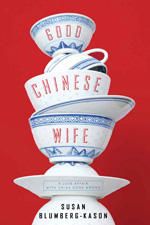
You may remember Good Chinese Wife, Susan's memoir of her marriage to a man from central China. Susan also contributed to the Dragonfruit anthology and she has been a great supporter of my writing. Susan is traveling from Chicago for the festival.

The discussion is sure to be interesting. I know many of you have experienced cross-cultural relationships of various kinds in your lives abroad. It would be great to see you there and hear your thoughts on the topic. Buy your tickets for the event here!

Wednesday, February 4, 2015

My first six months as a full-time writer

I recently posted a video update on my first six months working as a full-time writer here in Hong Kong. Some of the milestones I mention in the video were four years in the making, but it has still been an amazing ride over the past few months!


If you missed the video when I announced my decision to quit my day job, here it is. This is by far my most-viewed video, by the way.


I recently appeared on RTHK's State of the Art program. As soon as I get the links sorted out I'll post those too. Did anyone in HK hear it live?

Tuesday, November 18, 2014

Notes from the Hong Kong International Literary Festival

My spoils from events with X-Men writer Marjorie Liu, expat novelist Brittani Sonnenberg, and Unexploded writer Alison MacLeod.

For the first ten days in November, authors from all over the world descended on Hong Kong for the annual International Literary Festival. People like Junot Diaz, Alison MacLeod, and Tash Aw entertained and inspired with talk of their work at venues all over the city. The Hong Kong International Literary Festival has always been important to me. It's where I met my first writers' group and my first author-hero (Peter Hessler). This year, I got to be a festival author too.

My event was a panel featuring Hong Kong-based writers. In addition to myself, we got to hear from Marshall Moore (publisher of Signal 8 Press) and Maria Chaudhuri. Jason Y. Ng sadly couldn't make it due to a flight delay, but the event was well-attended and lots of fun. Each author read aloud from their new books and then we had a fascinating discussion with the audience on my three favorite topics: writing, publishing, and Hong Kong.

Best of all, we launched my long-awaited memoir Year of Fire Dragons. The book arrived from the printer just in time for the event. I saw it for the first time myself the night before!

As a festival author, I also got to do a brief radio interview on RTHK and speak about being a writer at a local secondary school. (It made me miss my old students a lot.) The festival was a great success and I'm so glad I got to participate.


Now, Year of Fire Dragons is making its way into Hong Kong book stores. If you spot it, please tweet a picture to @ShannonYoungHK! If you're overseas, you can pre-order from Amazon or order directly from the publisher, Blacksmith Books. The e-book will be out soon!

Just before going on RTHK with Noreen Mir.

Did you attend any HKILF events? Which one was your favorite?


Wednesday, November 5, 2014

A Tale of Two Book Launches

Available for pre-order on Amazon
In a strange turn of events, I am in the process of launching two books this month. One is the Hong Kong travel memoir I have been talking about since this blog began, now titled Year of Fire Dragons: An American Woman's Story of Coming of Age in Hong Kong. Though I haven't yet held the book in my hands, it has been printed and will be appearing in Hong Kong bookstores any day now. I've written a bit more about this book's journey in my new column on The Displaced Nation.

If you are in Hong Kong, I would be honored if you would attend the launch event, which is part of the Hong Kong International Literary Festival. It will take place at 10 am this Sunday at the Duke of Windsor Building on Hennessy Road in Wan Chai. You can buy tickets here. The event will feature two other wonderful Hong Kong-based authors, Jason Y. Ng (No City for Slow Men) and Maria Chaudhuri (Beloved Strangers). I hope you can be there!


The other book I am launching this week is totally different. It's a post-apocalyptic adventure set at
$2.99 on Amazon
sea that began life as my NaNoWriMo project in 2012. It's available as an e-book from Amazon, Barnes & Noble, and Kobo, and the paperback will be for sale by the end of the month. This book is so different from my other work that I am publishing under a pen name, Jordan Rivet, for which I maintain a separate blog. If you happen to enjoy dystopian and post-apocalyptic fiction, please check out Seabound. To celebrate this launch, I am digging into another NaNoWriMo project: writing Book 3 in the Seabound Chronicles by Jordan Rivet.

Thank you all so much for your support and encouragement. I'll have more to say about Year of Fire Dragons soon, but in the meantime I just wanted to let you know about this surreal moment in my publishing life. 

Friday, January 25, 2013

SHARK'S FIN AND SICHUAN PEPPER by Fuchsia Dunlop


THE GIST:

Stories of eating and cooking from an authentic Chinese food connoisseur.

THE VERDICT:

Subtitled A Sweet-Sour Memoir of Eating in China, British author Fuchsia Dunlop's memoir details her lifelong love affair with Chinese food. She first lived in China in the early 90s, where she found herself becoming so obsessed with the local cuisine that she enrolled as the only foreigner in a Sichuanese cooking school. She went on to write several cookbooks (in English) exploring the complexities and joys of Chinese food. The memoir details her evolution as a cooking student and her career as an ambassador for Chinese food in the West and (of course) includes recipes.

Dunlop does not shy away from some of the more unusual ingredients and nose-to-tail eating practices of Chinese cuisine, but she also doesn't make a point of emphasizing dishes that Westerners might consider "gross". She writes candidly about the tendency of travel writers to focus on innards and chicken's feet and dog when Chinese food culture is much more intricate, varied and sophisticated than a sensationalist article can portray. She writes eloquently about the intimate connection between the food and its source in traditional Chinese cooking, a connection that has largely been lost in Western kitchens.

The thing that sets this memoir apart from other odes to food is that Dunlop approaches her subject as both an academic and a fanatic. She describes each dish and cooking practice in meticulous detail, but she also reveals her unbridled passion for eating, savoring, smelling and otherwise enjoying Chinese food. I particularly enjoyed Dunlop's stories of her friendships with various Chinese cooks and foodies. She was able to build entire relationships around memorable meals thanks to the intensity of their shared passions. This is a thorough account of her life's work and, as a true expert, she acknowledges how much more there is to learn about Chinese food.
THE LINK:

Fuchsia Dunlop's website has many food-related blog posts and information about her cookbooks.

THE COST:

I purchased the paperback version at Dunlop's HK Literary Festival workshop. The e-book edition apparently doesn't exist, which is, frankly, inexcusable (on the part of the publisher) for a book that came out less than 5 years ago.

THE QUESTION:

What's your favorite Chinese food dish? Would you describe your relationship with food as intensely passionate? How does food affect the way you relate to people?

Thursday, December 20, 2012

7 DAYS AND COUNTING by Suvi Lampila


THE GIST:

Two strangers meet, possibly for the first time. Then the countdown begins.

THE VERDICT:

7 Days and Counting is my friend Suvi Lampila's debut novel. I wrote about her book launch last month, and this week she officially released the e-book edition. Her novel features an experimental structure and a thought-provoking ending. The events of the seven days are told first from the perspective of the woman, backwards, and then from the perspective of the man, forwards. The structure plays with one's perceptions and twists traditional plot conventions. Suvi proves that a story can have a satisfying climax and plenty of tension, even when you more or less know what happens "next". She goes far beyond the common practice of putting a scene from the end of the story at the beginning, and reveals surprises with each day.

There's always a danger when reviewing a friend's book that you will be too kind. However, I can honestly say that 7 Days and Counting is an extraordinarily clever piece of writing. It's short, not much longer than a novella, but it packs quite a punch. I finished reading it several weeks ago, but I'm still going over the final scenes in my mind and trying to decide how to interpret the ending. It's a book that forces you to think, and you could easily read it a second time and view it a totally different way. Part of Suvi's inspiration comes from pictures, like the one featured on the cover, that look like completely different things to different people.

Suvi's writing is precise and intelligent. She uses clean descriptions and clever dialogue to slowly reveal the lives of her characters. You get the sense that she always knows what her characters, even the  minor ones, are doing when they are not in the scene. She plays with the idea that there is usually more to people's actions than meets the eye, and human relationships are never simple. This is a book that's worth at least one read, and probably two.

THE LINK:

Suvi Lampila's website

THE COST:

$4.50 for the Kindle edition

THE QUESTION:

What other books with a non-traditional structure have you read? Did they work?

Friday, December 14, 2012

A TIGER IN THE KITCHEN by Cheryl Lu-lien Tan


This is Vietnamese food, not Singaporean, but it's what I had for lunch after Cheryl Tan and Fuchsia Dunlop's Lit Fest talks about food writing left me absolutely starving.

THE GIST:

A New York City writer returns to her home, Singapore, to learn how to cook from her extended family.

THE VERDICT:

Cheryl Tan spent her childhood in Singapore, but she has since become a thoroughly Americanized fashion journalist. She doesn't usually cook, and she resents any implications that, as a woman, she should have to. However, like any good Singaporean girl, she loves food, and she dreams of the dishes that made her grandmother a legend in their neighborhood. In this memoir, Cheryl decides to return to Singapore and collect the recipes and wisdom of the women in her family before she misses her chance.

This memoir takes place over one year during which Cheryl makes numerous visits to her family in Singapore. She shares their stories over boiling pots of curry and armfuls of doughs. The women in her family have taken vastly different paths, and it is interesting to see how Cheryl, as a liberated, modern woman, relates to them. Her efforts are clumsy at first, but she begins to understand the cooking processes and the women's choices better throughout the course of the year. She explores her own attitudes and prejudices towards family, motherhood and women's roles as she trails after her aunts and grandmother in the kitchen.

The writing style is very chatty and sometimes sarcastic. There are some very warm scenes between the family members, and it is interesting to see how the author teases out the stories of the family she didn't know as well as she thought. Her enthusiasm for eating is evident, and of course she includes recipes at the end of the narrative. The stories of Singaporean cooking are interspersed with Cheryl's attempts to make bread in her New York apartment as part of a blog challenge, which I found distracting, but it did provide a counterpoint to the whirl of dumplings, pineapple tarts, moon cakes and curries. I'm going to Singapore next week for the Christmas holiday, and this book definitely whet my appetite for some great food.

THE LINK:

Cheryl Tan's blog
My reflections from Cheryl Tan's writing workshop at the HK Literary Festival

THE COST:

I bought the paperback at Cheryl's HKILF event. The Kindle edition is $8.

THE QUESTION:

What special dish do you associate with your own extended family? For me it's a type of chicken curry, a recipe that actually came from Singapore originally.

Tuesday, October 9, 2012

Hong Kong Literary Festival

With Cheryl Tan at the Hong Kong Literary Festival
This weekend I went to City University in Kowloon Tong for two writing workshops as part of the Hong Kong International Literary Festival. The workshops were taught by Cheryl Tan, author of A Tiger in the Kitchen and Fuchsia Dunlop, author of numerous Chinese-food-related books, including Shark's Fin and Sichuan Pepper. It was inspiring to see two women, both journalists, who have turned their passions into admirable careers. In addition to the speakers, I got to meet some cool local writers and catch up with some of my writing friends in the audience. Here's some of what I learned:

Cheryl Tan on mining your family history for stories

Cheryl Tan is the author of a family memoir about how she got to know her Singaporean relatives, and her grandmother in particular, by learning to cook their food. A New-York-based journalist, Cheryl facilitated the workshop by sharing her own experiences and asking members of the audience to talk about what they want to write. She gave practical suggestions for how to get your family members to open up, especially if you want them to reveal the true, sometimes unsavory stories. Some of her tips:
  • think about family members as characters so you can describe them with the necessary distance and accuracy
  • do activities together (such as cooking) to trigger memories
  • ask to see old objects
  • if necessary, play relatives off each other to get a more accurate picture of past events, and then use both accounts
  • make sure your relatives know you will be writing about them so they don't feel betrayed
On memoir writing in general:
  • clean structure is vital, especially when dealing with many characters
  • find a universal feeling or theme that people will understand
  • think about the "newspaper angle" of your story to find what will actually compel people to read it
  • for big projects, approach the story as a series of magazine articles rather than 80,000 words
  • use a present frame for a past story
  • remember that every story you include has to further the narrative
  • remember that the story has to be interesting for someone who doesn't know the people involved
I'm currently revising my Hong Kong travel memoir in preparation for a round of queries, but I'm already looking ahead to my next project. At some point, I would like to write about growing up in a homeschooling family of nine children. My HK book deals with the events of one year and one unconventional love story, so it was relatively easy to structure. With so many characters and such a large time frame, the task of writing about my family is quite daunting. This talk helped me start to narrow down the best way to approach the story.

Fuchsia Dunlop on food and travel writing

Fuchsia Dunlop, a Brit who grew up in Oxford, is one of the most prominent Western women currently writing about Chinese food. She trained at a cooking school in Chengdu, and has since published both cookbooks and travel memoirs of her experiences as a Western woman cooking and eating her way through the wide world of Chinese cuisine. She, too, is a journalist, and she had both encouraging and practical words for writers who are interested in food and travel. Her tips:
  • find a surprise angle to set yourself apart
  • trim excess material (you can practice this by writing for publications with space restrictions)
  • always have a selling point
  • write a blog, both for practice and exposure
  • you have to put in the hours before you'll be able to write the beautiful, spontaneous things
  • always maintain your integrity
Fuchsia's passion for her subject was evident. She encouraged her audience to do what interests them without certain pay off. Although she admits she spent many years writing broke, it has been well worth it in the long run.

Both writers urged their audiences to blog, but they also got me thinking about pitching more pieces to newspapers and journals. While I'm editing my Hong Kong travel memoir, perhaps I'll work on a few short pieces before I jump into my next book-length project.

Are you going to any of the HK Lit Fest events this year?

Friday, June 3, 2011

HABIT OF A FOREIGN SKY by Xu Xi


THE GIST:

A businesslike woman in Hong Kong loses her family and has to navigate a world of money, corporate deals and new men while figuring out what she actually wants.

THE VERDICT:

This is the second work by Hong Kong-based author Xu Xi that I have read since I moved here. HABIT OF A FOREIGN SKY takes place in Hong Kong, New York, Shanghai and the skies in between. Gail Szeto is a no-nonsense businesswoman orchestrating the merger of two international investment banks. She keeps a tight reign on herself, and tries not to dwell on her family's humble (and shady) origins. When she loses each member of her family in quick succession, she finds herself unsure of what to do next.

Family is a major theme in this book, just as it is in Xu Xi's earlier novel, HONG KONG ROSE. Gail reconnects with her American half-brother, who is also a character in HONG KONG ROSE, and he reminds her of her painful past. For the first time in many years, she also associates with her mother's old friends from her dance hall days. Gail is a woman who is used to not needing anyone, but she finds that she relishes the connection with other people. This is a novel about softening and opening up to others in the midst of tragedy.

The story is intricate and complicated, just like real life. Xu Xi leaves loose ends and open questions, but she takes the reader through complex, modern relationships and circumstances with sharp assurance. She explores the world of international business deals and reveals the faces and messy lives behind those jet-setting power suits. She recreates the business and personal worlds of Hong Kong with uncanny insight. The writing style is confident and thorough, demonstrating Xu Xi's mastery of the craft of storytelling.
THE LINK:

Xu Xi's website
My account of Xu Xi's talk at the Hong Kong International Literary Festival

THE COST:

I bought a paperback copy of this book at the HK Literary Festival (and had it signed). The list price on Amazon is currently $11.70 US.

THE QUESTION:

Do you think that women have to be cold and controlled in order to be successful in the corporate world?

Friday, March 25, 2011

RHUBARB by Craig Silvey


THE GIST:

A blind girl and a reclusive boy connect and learn to heal from personal trauma over cello music and rhubarb.

THE VERDICT:

This is a sweet, sad, but ultimately uplifting story about the aftermath of tragedy for two young people. They are each stunted in some way by their experiences, and they struggle with the insomnia and ignominy of memory.

At its heart, this is a love story. Silvey explores themes of loss, betrayal, healing, music, and family. He includes many funny moments and a few very memorable characters. He uses animals (a guide dog, two possums, a hermit crab) to personify and enrich the lonely worlds of Eleanor and Ewan.

The style of this little novel is lyrical and poetic, full of repetition and alliteration. Silvey has a unique way of using words to create images and emotions that are original and endearing. His very vocabulary makes you think, and it makes you want to keep reading.

THE LINK:

This is my account of Craig’s event at the HK literary festival

THE COST:

I bought the paperback edition at the literary festival event and it was expensive (really expensive). The book was imported from Australia and it is not available on Kindle (yet).

THE QUESTION:

Do you think we need to connect with other people in order to overcome grief, or can we heal in solitude?

Tuesday, March 22, 2011

FACTORY GIRLS by Leslie T. Chang


THE GIST:

A journalist spends a few years following young migrant workers in one of China's booming factory towns, telling the story of their lives as it happens.

THE VERDICT:

This is a fascinating chronicle of a unique generation in China. Leslie Chang explores the lives of young women who leave their rural villages to work in the big city. From as young as 16 they must learn to survive and create their own luck in a rapidly changing country. She also tells of her own family's history in China and how they became migrants to America.

Chang's research took her into the factories, dormitories and social lives of her subjects, and she even traveled home with them to their villages during Chinese New Year. These women have unprecedented indepedence, and take on leading roles when they send money home and become the highest earners in their families. They do not always stay in the factories, and Chang watched as they pursued futher education with the goal of becoming clerks, speakers of Cantonese and English, receptionists, and even health supplement saleswomen.

Chang's primary aim was to tell the real, personal stories of the Chinese industrial machine, rather than focusing on factory conditions and injustices. Her book reminded me of The Jungle in that it put a human face on factory life. She writes of the incredible drive and determination of these young women who are doing what no one else in previous generations has done before.

THE LINK:

This is my account of Leslie Chang's lecture at the Hong Kong International Literary Festival. This is her Random House profile.

THE COST:

$10.99 for the Kindle edition

THE QUESTION:

What do you think about Chang's method of writing her story in reverse?

Friday, March 18, 2011

HKILF: Man Asian Literary Prize


The Hong Kong International Literary Festival occurs in connection with the Man Asian Literary Prize. This is a relatively new award in the tradition of the Man Booker Prize. Since 2007 it has been given for a work of fiction by an Asian author that is either written in English or translated into English. The winner receives $30,000 US and the translator, if any, receives $5,000 US.

The Literary Festival and the Man Asian Literary Prize hosted a joint event on Wednesday night at the Kee Club in Central for the five short-listed authors and their translators. The two Japanese authors, Kenzaburo Oe and Yoko Ogawa, were unable to attend, but their translators were present, along with the other three authors: Manu Joseph and Tabish Khair from India and Bi Feiyu from China. Each author read a portion from their book and answered questions from the audience. Bi Feiyu and his translator were both present, so they read in both English and Chinese.

My job was to take tickets at the door with volunteers from the Literary Prize’s office. There were members of the press and VIPs in attendance, along with guests who had purchased tickets through the literary festival. The reading was intimate; the guests sat around low tables in the posh bar area of the Kee Club and enjoyed glasses of wine, and the authors sat in the front under atmospheric lighting. From my post in the back of the room I couldn't hear the readings very well, but the low murmuring was punctuated by moments of beauty.

There were quite a few questions for the translators about the challenge of finding a unique English voice for the authors. Someone asked Bi Feiyu whether he ever feels that there are topics he cannot write about in China. He said he writes about whatever he wants. Others asked the two Indian authors, whose books are written in English, about their motivation and inspirations. Manu Joseph was particularly engaging, and he talked about being approached as a magazine editor by parents who think their children are geniuses. This inspired him to write SERIOUS MEN about a father who develops an elaborate fiction around his “genius” ten-year-old son.

The Man Asian Literary Prize was awarded at a private dinner on Thursday night. Bi Feiyu from China took home the award for his book THREE SISTERS, a story of the three women who live through the Cultural Revolution and face a changing and developing China. His two translators, Howard Goldblatt and Sylvia Li-chun Lin shared the $5,000 prize (source: www.manasianliteraryprize.org).

The Hong Kong International Literary Festival concludes with the closing party at The Pawn in Wanchai tonight. Do stop by if you are in Hong Kong! I’ll share closing thoughts on the Festival this weekend. Look for more reviews of the books featured in the Literary Festival over the past ten days.

Thursday, March 17, 2011

HKILF: Brian Castro and Xu Xi


On Tuesday the Hong Kong International Literary Festival program included simultaneous events at the Central Library. I was responsible for picking up noted author Brian Castro whose session was about his book: SHANGHAI DANCING. I bounced back and forth between his event and the one next door in which Hong Kong author Xu Xi talked about her latest book: HABIT OF A FOREIGN SKY.

Shanghai Dancing: Truth or Fiction? with Brian Castro

Brian Castro was soft-spoken and kind. He looked the part of a university professor, and his talk had a bit of a lecturing feel. His book is a “fictional autobiography” about a journey through Shanghai, Macau, and his father’s life. He read passages from the book to demonstrate its stream of consciousness style, and this sentence stood out to me: “I packed a suitcase and walked out of my life forever.”

Castro spoke about the divide between truth and fiction, and what it was like for him to question and ignore the boundaries between the two in his book. He wanted to do something that no one has done before. He explored unreliable narration as he wove his story through different threads, and used photos to both add and take away the truth from the fiction. He said he needed to work through things that he had heard and misheard as a child, and writing a fictional autobiography allowed him to do this.

Castro wrote this book in an effort to do something completely new. He talked about how publishers were hesitant to take on his book because it did not fit easily into a box, and he argued that publishers do not know how to read literature anymore. James Joyce heavily influenced him, and his book bears a strong resemblance to ULYSSES. He described his work as similar to Joyce in that he too wanted to make a difficult journey in literature and tell his story in a purely original way.

Habit of a Foreign Sky with Xu Xi

Xu Xi is also a university professor, and she is currently the writer-in-residence for the MFA in Creative Writing at City University of Hong Kong. She is a dynamic speaker and a dramatic reader. She spoke of her love for Emily Dickinson and quoted the poem from which she drew the title for HABIT OF A FOREIGN SKY. She read sections from the book and talked about the moments that form her characters.

The main character in HABIT OF A FOREIGN SKY is a Eurasian woman in Hong Kong. Xu Xi talked about the challenge of being comfortable in your own skin and addressed the feminist themes in the book. She believes that with the rapid changes in the world we are poised to see something we haven’t seen before. She is encouraged to find women everywhere able to do just about anything they want. At the same time she said she is confused by the return of stiletto heels (which she described as foot-binding by choice) and the way women choose to behave in a world where they can do anything (think Real Desperate Housewives and their ilk).

Xu Xi spoke about her characters as living, breathing people. She talked about how some of them follow her around from book to book. They catch her attention and come back when she doesn’t expect them. They get under her skin and hang around until she has done their stories justice. She has a living relationship with her craft, and she is clearly passionate about her work.

Wednesday, March 16, 2011

HKILF: An Evening with Craig Silvey


Craig Silvey is the young Australian author of award-winning novels RHUBARB and JASPER JONES. I showed up for his event at the HK International Literary Festival and found that there was not much need for a volunteer. The event at the Saffron Café on the Peak was very laid back, and Craig seemed quite comfortable chatting with the attendees over wine and canapés. I met some interesting volunteers and booksellers, and we talked about writing until the event began.

The conversation, moderated by Amanda Hayes, focused on JASPER JONES, the story of a 13-year-old boy who makes a disturbing discovery in a rural Australian town. He must come to terms with the lies and myths told to children to keep them safe as he experiences the realities of the world. Craig was casual, charming and extremely well spoken. He had an easy way with words and he cracked jokes and shared personal stories as he discussed his book.

Craig described the writing process as a very organic experience for him. He views the story as a gift that the writer gets to bring to life, and he said he often does not know much about his story and themes until he writes them out. He says he becomes obsessive about his work as he brings the characters to life. He was humble and honest, saying that he does not view himself as a preternaturally gifted writer. He said he just really wants it and he is a stubborn person and that makes all the difference. He has been heavily influenced by the American Southern Gothic tradition, and JASPER JONES has been compared with TO KILL A MOCKINGBIRD. He laughed off the suggestion that he is the Australian Mark Twain.

The audience at this intimate session mostly consisted of 30-something Australian women. Many of them had read Craig’s books (I bought his first novel there; the Kindle edition of the second comes out in April). They had good questions about the nuances of the novel, but also just seemed charmed by Craig himself. His successes include a nomination for Australia’s Bachelor of the Year, and there was only one man in attendance. I also met Australian authors Shirley Shackleton and Sally Rippin who had decided to watch Craig’s event before their own sessions the next day.

At the end of the evening I was tasked with making sure Shirley Shackleton got safely back to her hotel. She asked Craig Silvey and Sally Rippin if they were heading back, too, and before I knew it I was piling into a cab with all three authors. We talked about Hong Kong as we sped down the Peak toward Causeway Bay. Sally lived here as a child, and she spent much of her life living in different countries. Craig and Sally said they had both always known they wanted to write, and there was never really a time when they decided to start. Writing is purely and simply a part of their souls.

Tuesday, March 15, 2011

HKILF: Writer and Agent with Constance Briscoe, Darley Anderson and Marysia Juszczakiewicz


The final session on Saturday at the HK Literary Festival featured a panel of highly successful people from the publishing world. Constance Briscoe is the best-selling author of UGLY, a memoir of her abusive childhood, and one of the first black judges in the UK. Darley Anderson is her agent and a veteran of the publishing industry who represents a range of highly successful authors. Marysia Juszczakiewicz is the head of the only agency in Hong Kong, Peony Literary Agency.

The session had a question and answer format, and Constance and Darley shared the story of her book’s journey from manuscript to bestseller. The audience was full of aspiring writers, and many of them had also attended Aleesah Darlison’s session earlier in the day. They asked many questions about finding literary agents, the current publishing market, and book promotion.

The basic take home message was that you must have a literary agent, and you should rely on their knowledge of the industry to find the appropriate editor for your work. Constance initially sent her manuscript directly to a publisher and was rejected before finding Darley. He worked with her on structural edits and cuts to turn the book into an extremely desirable commodity. At the time the “misery memoir” market was especially hot, so they ended up holding an auction between 8 editors for the right to publish the book. Marysia reminded everyone that this is not typical.

Darley said that one of the keys to the book’s success was that he immediately recognized Constance’s ability to promote her work. Publishers typically cannot devote too much time to publicity for every single book, so the job of getting the word out there is firmly in the author’s hands. Constance has a dynamic presence and a driven nature that make her an excellent bookseller. She is currently working on a series of crime dramas.

Darley said that a bestseller must have a page-turning quality, no matter the subject matter. Constance’s story is non-fiction, but she has the ability to tell a story in a dramatic, can’t-put-it-down manner. A bestseller must be infused with drama, good pacing, humor, and strong and compelling characters. Constance also emphasized that you must write what you are good at and not just write for whatever market you think is big. She said it is the agent’s job to worry about the publishers and the future of the book and it is the writer’s job to write the best book they can.

After the event the two agents and the author stayed for a long time, talking to all the aspiring writers with questions about what to do for their own projects. Constance was particularly engaging, telling stories as she signed books and asking the writers all about their work. A lot of the information about literary agents was not new for me because I spent a summer working for a literary agency in London a few years ago, but I just loved listening to these powerful characters talking about their work.

Monday, March 14, 2011

HKILF: The Dreamer with Rajeev Balasubramanyam


I was not initially assigned to the second Saturday session at the HK Literary Festival, but I was already at the Racing Museum so I ended up staying. I am very glad I did. Rajeev Balasubramanyam is a talented novelist who won a host of awards for his first novel: IN BEAUTIFUL DISGUISES. He spent the next eight years trying to overcome the expectations that follow such early success and finally published THE DREAMER in 2009.

Rajeev looks like I imagine Jesus would have looked had he been Indian and raised in Lancashire. He has a peaceful aura and the sort of deep reading voice that requires you to listen. He read excerpts from THE DREAMER and talked about topics ranging from racism in Britain to the need for a quiet mind when writing. He shared his thoughts on multiculturalism, and said he believes that governments should step back from making policies about race as they only invite people to look for the loopholes.

Rajeev said that he needs quiet in order to think and write. After receiving lots of attention for his first novel it was very difficult to find that quiet again. In his early 20s, when many people realize they have no idea what they want to do, people were expecting him to produce his next great work. He spent eight years writing and throwing his material away before finally settling on THE DREAMER, a story of the love between a man who experiences a psychological breakdown and a dead woman.

When asked about Hong Kong, Rajeev said, “This place is just weird.” He currently teaches creative writing to adults here, and he says he has never lived anywhere else that unabashedly has just one value: money. He said two years in Hong Kong have finally made him understand capitalism and Modernity. He mentioned that his students have to consciously decide to step away from the droning, impersonal atmosphere of the city in order to express their creativity.

Acclaimed Hong Kong based author Manreet Sodhi Someshwar moderated the session. She asked pertinent, engaging questions and expertly allowed Rajeev to share his thoughts without undue interruption. The audience seemed captivated by the discussion (I know I was), and many of them appeared to be Rajeev’s former students.

After the session ended, I was lucky enough to sit down for some dim sum with Manreet, Rajeev and his partner Divya, and another festival volunteer. They were friendly and personable, telling stories about their crazy roommate when they first moved to HK and asking for my own stories about the American Southwest. I have been thoroughly impressed by the authors I’ve met so far at the Literary Festival. The overwhelming similarity is that these writers are people who seem to be fascinated by other people.

Sunday, March 13, 2011

HKILF: I Want to Be a Writer with Aleesah Darlison


Saturday was a big day for the Hong Kong International Literary Festival. There were five events, all being held at the Racing Museum near the Happy Valley Racecourse. I collected tickets, fetched water, and performed general volunteering duties all day. I watched four of the five events, and only missed the fifth for a really good reason (a quick dim sum with a couple of the authors!). I'll write up each event over the next day or so, so please come back for more.

The first event was designed for young writers who want to learn more about the process of becoming an author. Australian writer Aleesah Darlison shared her experiences as the author of children's books about animals and the Totally Twins series for 8-12 year old girls. There were lots of high school students in the audience, in addition to aspiring writers of all ages.

Darlison emphasized the importance of networking as you learn to write. She suggested joining writer's groups, attending workshops, looking for opportunities through writing centers and libraries, and searching for online resources. She said it is absolutely vital to read your work aloud and ask other people to read your work as you develop your skills as a writer. She also recommended creating business cards and giving them to as many people as you can.

Darlison also said that writers must develop a range of skills in order to be successful. She worked in marketing for ten years before she started to write, and the skills she learned have been invaluable as she sells her books. Authors need to know about design, sales, public speaking, marketing, and websites in addition to writing. She also suggested that new authors think about the image they want to cultivate as they try to create a name for themselves in the industry.

Darlison reminded the audience that becoming a writer, like any other business, requires an investment. Among the potential costs are writer's association fees, course tuition, postage and stationary, and entry fees for writing competitions. She mentioned the importance of building a writer's CV by entering competitions, having shorter pieces published, and contributing to anthologies and book reviews.

The audience had many questions about how Darlison (a mother of two) makes time to write, how to deal with writer's block, and how much publicity she needs to do on her own. Darlison said she makes time to write while her kids are at school and daycare, and that is also when she does her publicity and visits schools. Others asked how long it takes to start making money as a writer, and she answered 3-5 years. She said most of her income usually comes from public appearances and speaker's fees. At the end of the event she recommended that people compile their contact information so that they could get some writer's groups started.

For the writers out there, do you have any advice to add for aspiring authors?

Friday, March 11, 2011

HKILF: Factory Girls with Leslie T. Chang


This evening I helped at my second Hong Kong International Literary Festival event: a standing-room-only talk by Leslie T. Chang, the author of FACTORY GIRLS. My duties were crowd control and ticket collection, so I did not have a chance to talk to the author personally. She had a very professional air and she was an interesting and straight-forward speaker. I am about halfway finished with her book, so I'll be putting up a review as soon as possible (I like it so far).

FACTORY GIRLS explores the lives of the Chinese young people who leave their rural villages to work in big factories in cities like Dongguan and Shenzhen. They represent the largest human migration in history, and most of them are young women between the ages of 16 and 22. They staff the massive factories that produce everything from shoes to electronics to machine parts. Chang introduced her book by explaining that there have been plenty of books written about the evils of factory life in China; she wanted to write the stories of the real people.

Chang took a unique approach in writing her award-winning book because she chose to follow her subjects around for several years to see what happened to them, rather than just interviewing a bunch of factory workers and then writing about it. Her talk earlier in the day (while I was at work) was about the process of writing in reverse, never quite knowing what would change in her subjects' lives as she wrote. She said she was actually a source of constancy for the young women she wrote about because, unlike most of the people in their transient lives, she was always there.

Chang talked about the fierce independence and the drive to get ahead of many of the girls. They are living during a time of immense change in China. Their overt individuality and independence are unprecedented in Chinese culture. These village girls are making opportunities for themselves by taking extra courses, staying informed about the different work options, and learning to live in the big cities, even though this makes it increasingly difficult to relate to the older generations. She showed some pictures of the factories and the women she studied, and she wanted to emphasize that many of them are happy to be living in the city, sending money home, and carving out bigger lives than their villages offer.

The audience asked about how Chang was able to get the girls to trust her. As a Chinese-American woman working in China, she said she was able to connect with the girls because she too knows what it is like to leave your home to pursue bigger opportunities. She also did not look too different from them, so factory bosses were less likely to chase her away. She was uniquely positioned to literally write about history in the making as she recorded the personal stories of the young women who form the backbone of Chinese industry.

Thursday, March 10, 2011

HKILF: River Town to Open Roads with Peter Hessler


Last night I attended my first Hong Kong International Literary Festival event. It featured American journalist Peter Hessler, author of RIVER TOWN and ORACLE BONES, talking about his newest book: COUNTRY DRIVING. As a festival volunteer I held the enviable post of "author escort." It was my job to meet Peter Hessler and take him to the speaking venue at the Duke of Windsor building on Hennessy Road.

He was tired, having just arrived from the US the night before with his wife (author Leslie T. Chang) and nine month old twins. We hailed a cab in Mid-levels and talked about Hong Kong and the areas we are from back in the States. In an odd way I felt like I already knew him; I had finished reading his travel memoir less than 24 hours before. The thing that struck me most about Peter Hessler was that he seemed genuinely interested in asking about me, how I ended up in HK, and even my opinions of education in Hong Kong. Demonstrating interest in other people seems to come naturally to someone who writes about people so sincerely. I could easily see why his subjects felt comfortable telling him about their lives.

When the event began I stood in the back and listened to the talk. Hessler was at ease in front of the audience, cracking jokes and showing jaw-dropping pictures of the Chinese landscape. COUNTRY DRIVING is about a series of roadtrips along the remote stretches of the Great Wall during which Hessler stopped to pick up rural hitchhikers and talk to people in the villages.

China is in a state of constant change, and Hessler witnessed firsthand the rapid migration of millions of people from the villages to the cities. The majority of the migrant workers on the move were women, all searching for a better life in the big factory cities. These were people with very little exposure to the outside world who were about to jump headlong into the progress machine of modern China. Hessler saw the evidence of a break-neck rate of change everywhere, from the modern roads to the cell phone carrying villagers to the brand-new factory towns standing empty as they waited for occupants.

At the end of the talk Hessler fielded questions about the reception of his books in China, where they have only recently been available in translation, as well as questions about the changing state of the journalism industry. He said that he thought books would endure, but was less optimistic about the future of newspapers and many magazines. He said he couldn't offer much advise to young writers who are uncertain about the industry, except to say that he learned the most about being a writer from his time in the Peace Corps. Studying literature at Princeton and Oxford paled in comparison to studying people in a remote river town in China.

Wednesday, March 9, 2011

RIVER TOWN by Peter Hessler


THE GIST:

A Peace Corps volunteer spends two years teaching English literature in Fuling on the Yangtze River and gets to know the local people and the language.

THE VERDICT:

This is a thoughtful and elegant travel memoir. Peter Hessler makes astute observations about the rapidly changing China with patience and grace. He makes a concerted effort to understand his environment and the people around him. He is honest about how his opinions are influenced by his Western worldview, while still looking critically at the Communist system.

The book includes many writing samples from Hessler's students. These provide a unique look at the concerns and opinions of young people in China in the late 1990s. He writes about his own experiences in Fuling, but for the majority of the book he focuses on other people and their lives. This is a refreshing change from the current trend in travel memoirs to focus entirely on one's own struggles.

Hessler's writing style is rhythmic and rich with description, and he brings the river town to life with humor and honesty. He peppers his work with literary references and poetic analogies that are particularly welcome in a work of narrative non-fiction. Additionally, he demonstrates a genuine appreciation for literature and its ability to connect people no matter where they are.

THE LINK:

National Geographic interview with Hessler, who remained in China and wrote from Beijing for many years

THE COST:

Kindle edition: $10.99

THE QUESTION:
To what extent is it possible to assimilate into a new culture, especially as an adult? Do you think an outsider can ever truly understand a new country?

*Note: This author is being featured in the Hong Kong International Literary Festival
Related Posts Plugin for WordPress, Blogger...